
Professionals
Product information
Tramvetol Brochure
File type: PDF
File size: 3.1 MB
For the reduction of acute and chronic mild soft tissue and musculoskeletal pain.
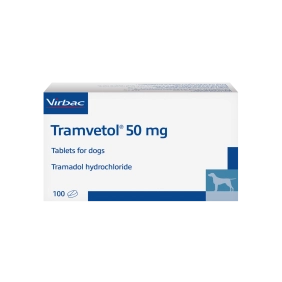

Tramvetol 50 mg tablets provide a potent, dual-action analgesic solution for dogs. Designed for rapid absorption and proven efficacy, it offers a reliable and well-tolerated option for managing acute and chronic mild soft tissue and musculoskeletal pain, helping to restore your patients' quality of life.
Available in Great Britain.
Contact support teams with any question by phone or via our quick form.
White to almost white, flat tablets with rounded edges, brown dots, and a break line on one side. The tablets feature a characteristic meat smell and can be divided into two equal parts. Packaged in white PVC/PE/PVDC-aluminium blisters. Available in boxes of 3 blisters of 10 tablets or 10 blisters of 10 tablets.
For the reduction of acute and chronic mild soft tissue and musculoskeletal pain in dogs weighing more than 6.25 kg.
Tramvetol features tramadol, a centrally acting analgesic with a complex dual mechanism of action. It acts as a non-selective agonist of the mu-opioid receptor (MOR) and inhibits the neuronal reuptake of norepinephrine and serotonin. Tramadol is readily absorbed following oral administration, reaching peak plasma concentrations within 45 minutes, making it highly effective for rapid pain management.²
Unlike most common opioids, tramadol does not typically induce side effects such as respiratory depression, bradycardia, or reduced gastrointestinal motility across an extensive analgesic dose range. It is metabolised in the liver to its primary active metabolite, O-desmethyltramadol,² and offers a proven safety and efficacy profile widely recognised in veterinary medicine.³
Tramadol (as hydrochloride)
For oral use in dogs weighing more than 6.25 kg.
As individual response to tramadol is variable, the optimal dosing regimen should be individually tailored based on dosage, patient age, pain sensitivity, and general condition. Tablets can be divided into two equal parts to ensure accurate dosing. For chronic pain, multimodal analgesia (e.g., combining with NSAIDs) should be considered.⁴
Special Precautions
Storage
1. Cepeda MS et al. Tramadol para la osteoartritis. Biblioteca Cochrane Plus 3, 2008.
2. KuKanich B, Papich MG. Pharmacokinetics of tramadol and the metabolite O-desmethyltramadol in dogs. J Vet Pharmacol Ther. 2004 Ago; 27(4):239-46.
3. Animal safety studies on u26, 225A. One-year oral toxicity study in the dog ND5087/PR4-6A/100. Data on file.
4. World Health Organization. Cancer pain relief. Albany, NY: WHO Publication Center; 1986.
File type: PDF
File size: 3.1 MB

The professional veterinary portal by Virbac. Dedicated to animal health professionals.


