
Professionals
Product information
Dermatology Quick Reference Guide
File type: PDF
File size: 2.1 MB
In light of the current focus on antimicrobial resistance, how does this affect our approach to the treatment of Otitis externa?
Published 26.03.2020
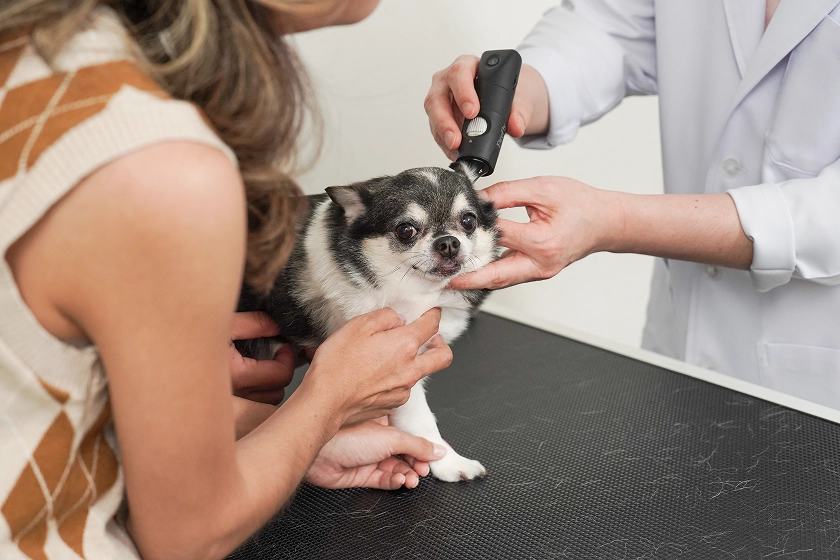
Otitis externa is a very common clinical presentation in small animal veterinary practice, and the management of cases is reliant upon the identification and treatment of the underlying cause, be it predisposing, primary or perpetuating.
It is not normally enough to just treat the infection that has presented in the clinic. It is often necessary to control secondary factors by using topical polypharmacy ear preparations to combat infections with bacteria and yeasts, and inflammatory processes within the ear canal. Topical preparations are ideal for this type of infection, as the antibiotic chosen can be given in much higher concentrations than it is possible to achieve when dosing systemically. Therefore antibiotics that the bacteria have shown apparent resistance to in in vitro culture and sensitivity testing, can actually still be effective when used topically. Cytological examination of ear exudate is one of the most important steps when deciding which treatment to use. It can easily be performed in house, and gives quick results allowing the identification of cocci, rods and fungal organisms such as malassezia spp. The knowledge of what is present in the ear is invaluable in the decision making process of which antibiotic to use.
The antimicrobials that are available in licensed topical preparations in the UK are – florfenicol, framycetin, fucidic acid, gentamicin, marbofloxacin, orbifloxacin and polymixin B. They all have differing profiles for which bacteria they would be expected to be effective against depending upon their classification. There are also studies showing synergy between some ear cleaning preparations and these antimicrobials, increasing the antibiotic susceptibility of certain bacteria. There has been a great deal of research into the likely resistance profiles of certain organisms such as Pseudomonas spp. against these antimicrobials. Orbifloxacin and marbofloxacin are both fluoroquinolones and therefore should not usually be used as first line treatments, typically being reserved for use if bacterial culture and sensitivity results indicate that they would be the most appropriate antibiotics to use due to resistance of the first line options. Therefore your choice of antimicrobial to instil topically into the ear canal should be based on history taking, clinical examination, cytological findings, and good antibiotic stewardship.
Contact support teams with any question by phone or via our quick form.
Contact support teams with any question by phone or via our quick form.
This content is intended exclusively for veterinary professionals. Please log in to your account or register for free to read the full article and access resources.
File type: PDF
File size: 2.1 MB
File type: PDF
File size: 1.7 MB
File type: PDF
File size: 2.5 MB
File type: PDF
File size: 1.9 MB
File type: PDF
File size: 405.3 KB

Get updates on Virbac products, access the latest CPD training modules, and receive resources to support your practice.
Yes, I would like to receive email updates on Virbac products, free CPD modules, and practice support resources. You can unsubscribe at any time via the link in our emails.
Find information and products for your clients
on the Virbac pet owner website

The professional veterinary portal by Virbac. Dedicated to animal health professionals.